Cutting Tool Safety Guidelines for Food Processing
In food processing environments, cutting tools are more than just equipment—they are a critical part of your safety and compliance program. Improper tool selection or handling can lead to contamination risks, workplace injuries, and costly compliance issues.
This guide outlines essential cutting tool safety guidelines to help maintain hygienic operations, reduce risk, and support food safety standards.
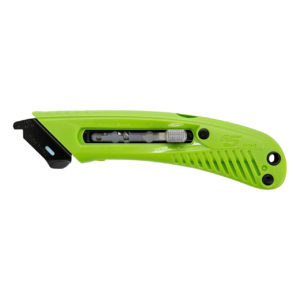
Food-safe cutting tools should minimize contamination risk, reduce blade exposure, and be easy to clean and control.
1. Use Food-Safe, Hygienic Cutting Tools
Always use tools designed specifically for food-related environments. Standard utility knives may introduce contamination risks due to exposed or removable blades.
👉 Browse compliant options in our Food-Safe Cutters category.
- Non-porous, easy-to-clean materials
- Rust-resistant components
- Minimal loose parts
2. Minimize Blade Exposure
Reducing blade exposure helps prevent both injuries and accidental contamination. Tools with enclosed or auto-retracting blades are ideal for food environments.
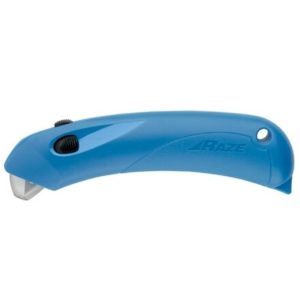
Recommended: RSC-432 Restaurant Safety Cutter
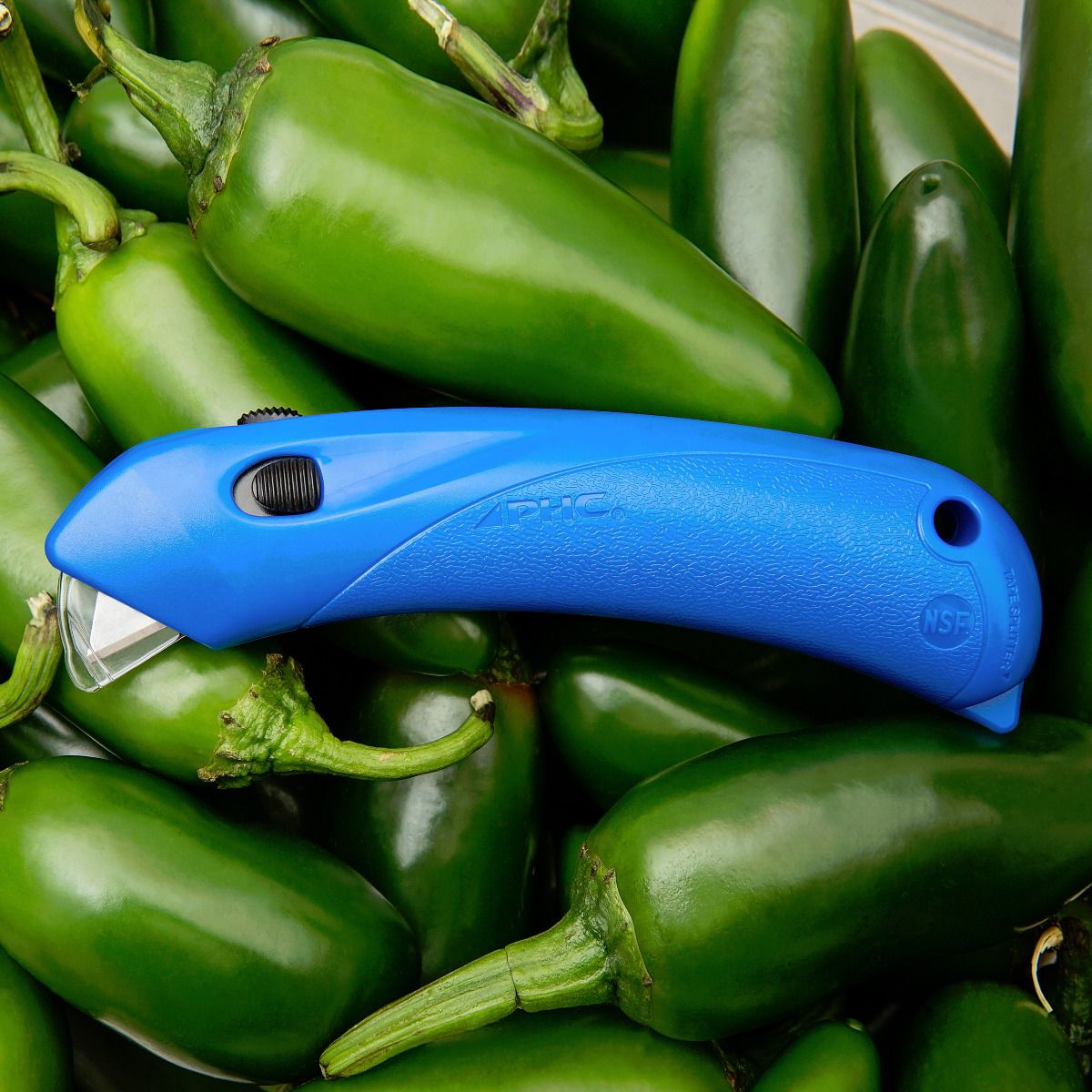
The Pacific Handy Cutter RSC-432 features a clear, retractable hood that automatically covers the blade after each cut—helping reduce injuries and contamination risks.
- Auto-closing blade guard
- Non-removable blade prevents loose parts
- Easy to sanitize design
- NSF Certified for non-food zones
3. Avoid Loose or Replaceable Blade Risks
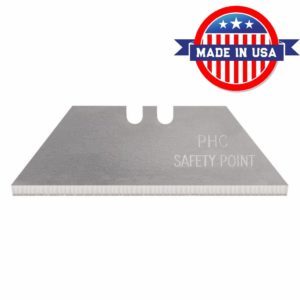
Loose or improperly handled blades are a major contamination risk. Tools with fixed or enclosed blades help eliminate this issue.
- Use non-removable blade systems when possible
- Avoid loose blade storage in food areas
- Train employees on proper blade handling
4. Use the Right Tool for the Task
Different materials require different tools. Using the correct cutter reduces risk and improves efficiency.
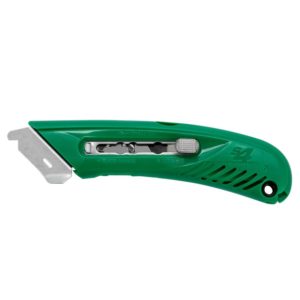
Recommended: Disposable Film Cutter
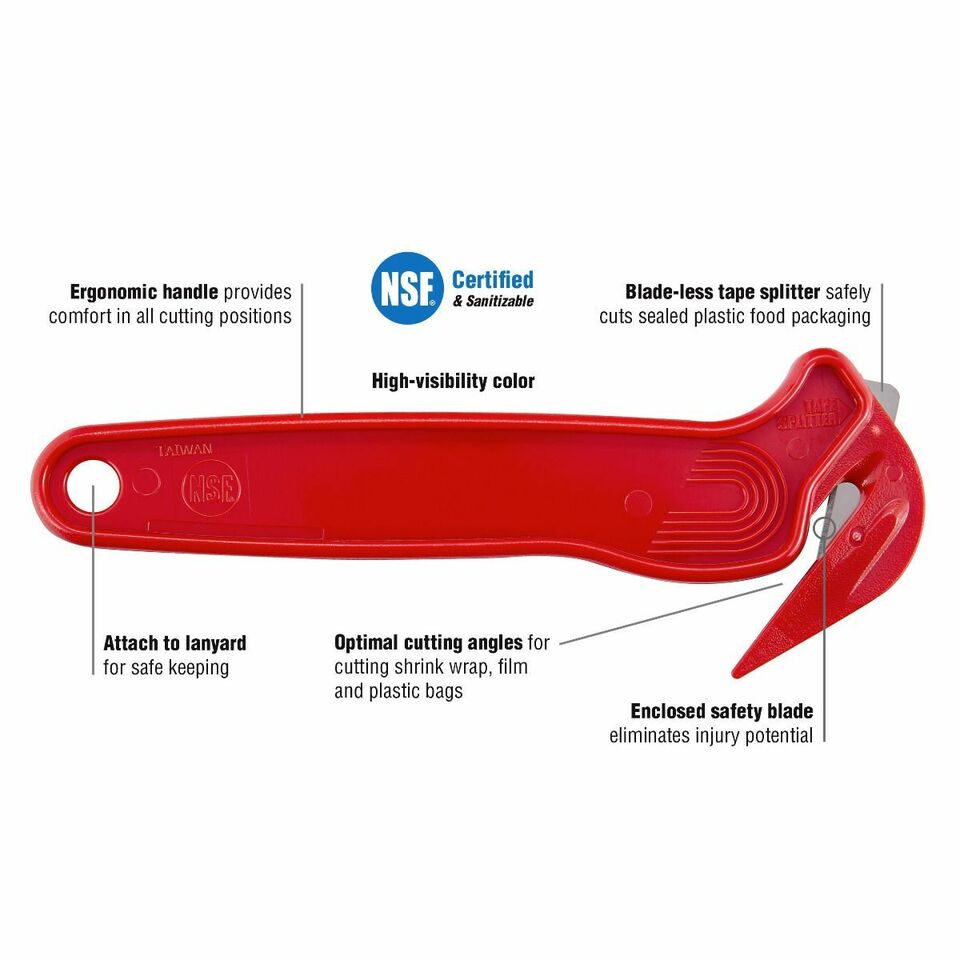
The Disposable Film Cutter is ideal for shrink wrap, tape, and plastic straps. Its enclosed blade reduces contamination risk while maintaining efficiency.
- Enclosed stainless steel blade
- NSF Certified
- Easy to clean and sanitize
- Color-coded options to prevent cross-contamination
5. Prevent Cross-Contamination
Cross-contamination is a major concern in food processing. Tools should be assigned, cleaned, and managed carefully.
- Use color-coded cutters for different zones
- Do not share tools between areas without sanitation
- Store tools in designated, clean locations
6. Clean and Sanitize Regularly
Cutting tools should be cleaned frequently to maintain hygiene and compliance.
- Use approved cleaning solutions
- Inspect tools for residue buildup
- Replace damaged or worn tools immediately
7. Train Employees on Proper Use
Even the safest tool can become a hazard if used incorrectly. Proper training is essential.
- Demonstrate safe cutting techniques
- Train on proper tool handling and storage
- Reinforce safety procedures regularly
Final Thoughts
Cutting tool safety in food processing is about more than preventing injuries—it’s about protecting your product, your team, and your compliance standards.
Choosing the right tools and following proper safety practices can significantly reduce risk while improving efficiency.