Disposable Gloves vs Cut-Resistant Gloves: Which Should You Use?
Choosing the right gloves is essential for safety, efficiency, and compliance—especially in warehouse, industrial, and food-handling environments. Two of the most commonly used options are disposable gloves and cut-resistant gloves, but they serve very different purposes.
This guide breaks down the key differences so you can choose the right protection for your workflow.
- Disposable gloves are best for hygiene, contamination control, and short-term use
- Cut-resistant gloves are best for protection against sharp objects and repeated use
What Are Disposable Gloves?
Disposable gloves are lightweight, single-use gloves made from materials like nitrile, latex, or vinyl. They are designed to protect against contamination, liquids, and minor hazards.
- Single-use for hygiene and contamination control
- High dexterity and flexibility
- Common in medical, food, warehouse, and industrial settings
When to Use Disposable Gloves
- Handling food or medical materials
- Preventing contamination
- Working with liquids or chemicals
- Short-duration or high-turnover tasks
Looking for a stronger disposable option? Not all disposable gloves are created equal—some are built for industrial-level performance.
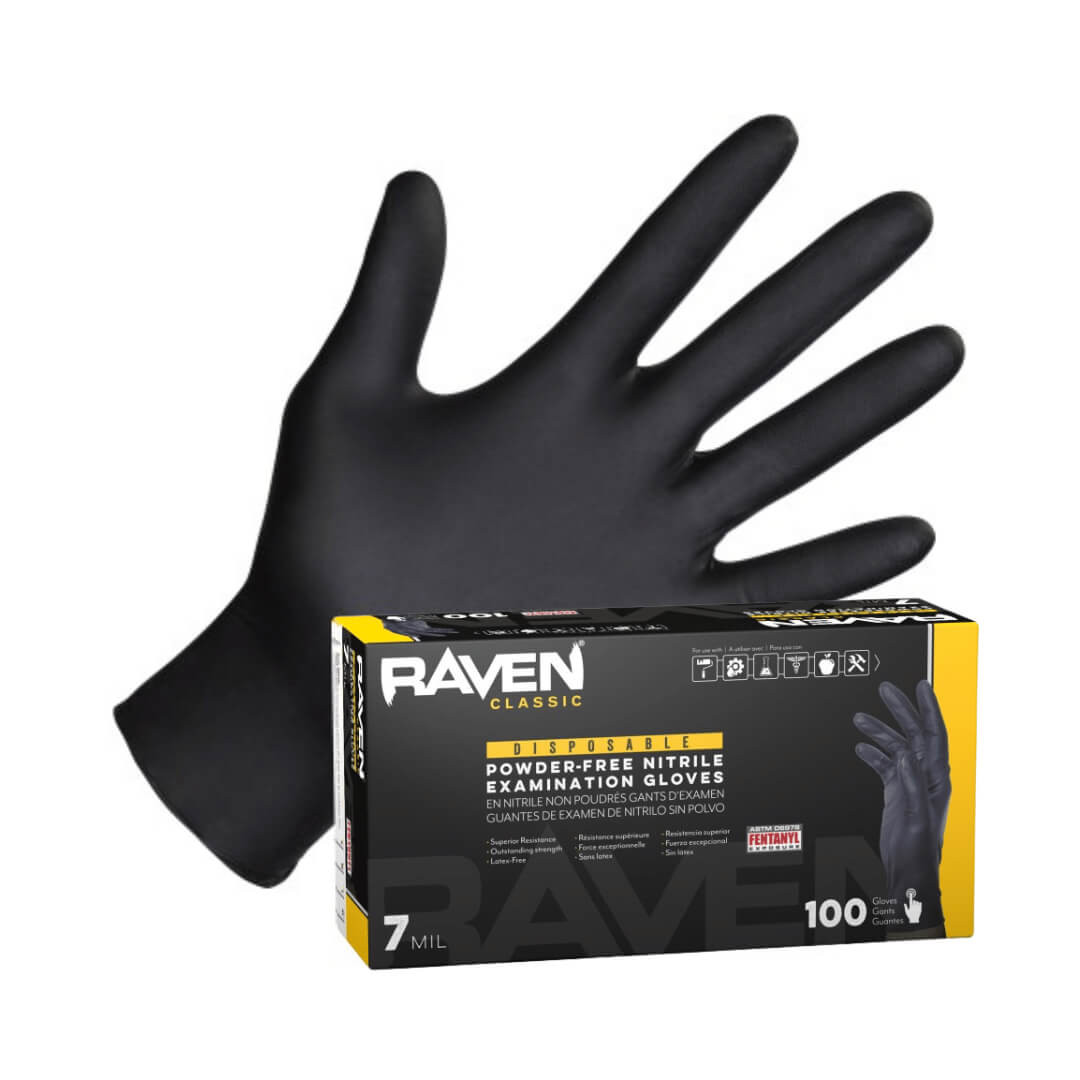
Featured: Raven Black Nitrile Gloves (7 mil, Exam Grade)
The Raven Black Nitrile Gloves deliver the flexibility of disposable gloves with added durability for demanding environments.
- Best For: Industrial, automotive, warehouse, and medical use
- Extra-thick 7.0 mil nitrile for durability
- Textured fingertips for superior grip
- Latex-free, powder-free, FDA-compliant
Ideal when you need both hygiene and enhanced protection.
Shop Raven GlovesWhat Are Cut-Resistant Gloves?
Box cutter gloves (cut-resistant gloves) are designed to protect hands from sharp objects such as blades, glass, and metal.
- Designed for cut and abrasion protection
- Reusable and highly durable
- Common in warehouse, industrial, and construction environments
Key Differences
| Feature | Disposable Gloves | Cut-Resistant Gloves |
|---|---|---|
| Primary Purpose | Hygiene & contamination control | Cut protection |
| Durability | Low (single-use) | High (reusable) |
| Dexterity | High | Moderate |
| Protection | Low | Moderate to high |
When to Use Cut-Resistant Gloves
- Handling sharp objects like knives, blades, or metal
- Warehouse and fulfillment work
- Construction and industrial applications
- Repeated or heavy-duty tasks
Can You Wear Both?
Yes—many professionals wear disposable gloves underneath cut-resistant gloves.
- Inner layer: hygiene (disposable)
- Outer layer: protection (cut-resistant)
This combination is ideal for food processing, industrial, and warehouse environments.
Final Thoughts
Choosing between disposable and cut-resistant gloves depends on your task. For hygiene and contamination control, disposable gloves are essential. For safety and protection, cut-resistant gloves are the better choice.
In many environments, using both together provides the best balance of safety and performance.